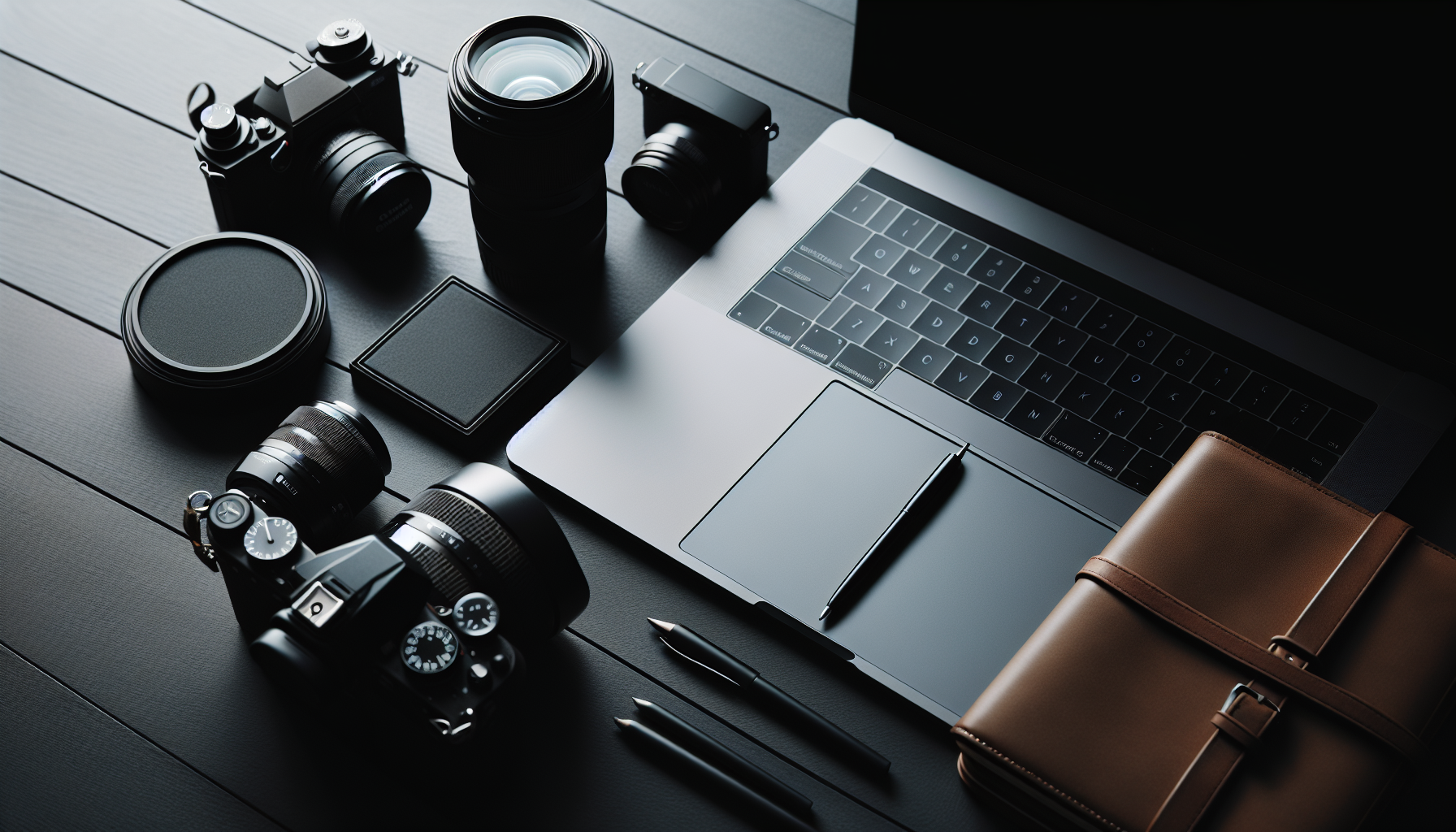
When you're starting out as a freelance photographer, the gear question is overwhelming. Everyone online seems to be shooting with £5,000 camera bodies and a bag full of L-series lenses. It makes you feel like you need to spend a fortune before you can even take a single client booking.
You don't. The essential equipment for getting a professional look as a freelance photographer starting out is probably a lot less than you think - and a lot of it isn't even about the camera body.
Start with the camera you already have
If you own a DSLR or mirrorless camera from the last seven or eight years, it's almost certainly capable of producing professional-quality images. The Canon 80D, Sony A6000, Nikon D7500 - these are all cameras that have been used by working professionals on real paid jobs. Stop waiting until you can afford the latest body.
Clients don't ask what camera you used. They look at your portfolio. That's what gets you hired.
The one lens worth investing in early
If you're going to spend money on anything, spend it on a fast prime lens. A 50mm f/1.8 on most camera systems costs somewhere between £100 and £200 new, and it will change your photos more than any camera body upgrade ever could. The background separation, the low-light performance, the sharpness - it all just looks more professional.
For portrait work, a 85mm f/1.8 is worth looking at too, but start with the nifty fifty. It's versatile enough for almost every genre and cheap enough that it shouldn't break the bank.
Try this
Buy your first prime lens used. MPB, Wex Secondhand and eBay all have solid used gear with decent return policies. You can often get a lens that's two or three generations old for half the price, and optically it'll still deliver excellent results for client work.
Lighting - you don't need a full studio setup
Natural light is free and it's genuinely beautiful when you know how to use it. For your first six to twelve months, learning to read and work with available light will teach you more than any artificial lighting setup. Position your subject near a large window, use a cheap reflector to bounce light back into shadows, and shoot during the golden hour when you're outdoors.
When you do want to add some artificial light, a single speedlight (a hot-shoe flash) gives you a huge amount of control without the cost of studio strobes. A Godox TT600 costs around £50 and is a solid starting point. Add a cheap softbox or shoot it into a white ceiling and you've got a workable portrait setup.
The stuff that actually signals professionalism
Here's where most new photographers get it wrong. They obsess over camera gear while ignoring the things that clients actually notice.
A good camera bag matters more than you think - turning up to a shoot with your camera stuffed in a supermarket bag is not the vibe. You don't need an expensive one, just something that looks clean and purposeful.
Memory cards and batteries - always have more than you think you need. Running out of storage or battery on a shoot is amateurish and completely avoidable. Carry at least two batteries and two 64GB cards minimum.
A sturdy tripod is worth buying once and buying right. The cheap ones wobble and break. Something from Manfrotto's entry-level range or a K&F Concept tripod will serve you well for years.
Common mistake
Spending £2,000 on a new camera body before you've mastered your current one. Upgrade your skills first. The body is rarely the limiting factor - your knowledge of light, composition and how to direct people almost always is.
Editing software and backup
Adobe Lightroom Classic is the industry standard for a reason. It's part of the Photography Plan on Creative Cloud which also includes Photoshop, and it runs at around £10-12 per month. If that's too much right now, Lightroom mobile has a free tier that's more capable than most people realise, and Capture One offers a free version for certain camera brands.
Backup is non-negotiable. Hard drives fail. Get yourself two external hard drives and back up every shoot to both. One stays at home, one goes somewhere else. Losing a client's photos is a reputation-ending disaster that's completely preventable.
Tool recommendation
Western Digital My Passport drives are reliable, portable and reasonably priced. Pair that with Adobe Lightroom and you've got a solid post-processing workflow from day one.
What to buy first - a rough order of priority
If you're building your kit from scratch on a limited budget, here's a sensible order: camera body (used, whatever you can afford that shoots RAW), a 50mm f/1.8 prime, two batteries, two memory cards, a basic camera bag, a reflector, Lightroom, two external hard drives. That's your minimum viable professional setup.
Everything else - speedlights, tripods, wider or longer lenses, ND filters, studio strobes - can come later as your income grows and your shooting style gets clearer.
The photographers who wait until they have perfect gear are still waiting. The ones who go out and shoot with what they have are the ones building portfolios and getting clients.
The takeaway
You don't need expensive gear to look professional - you need a fast prime lens, a reliable backup system, and the discipline to keep shooting. Build your portfolio first, upgrade your kit second.